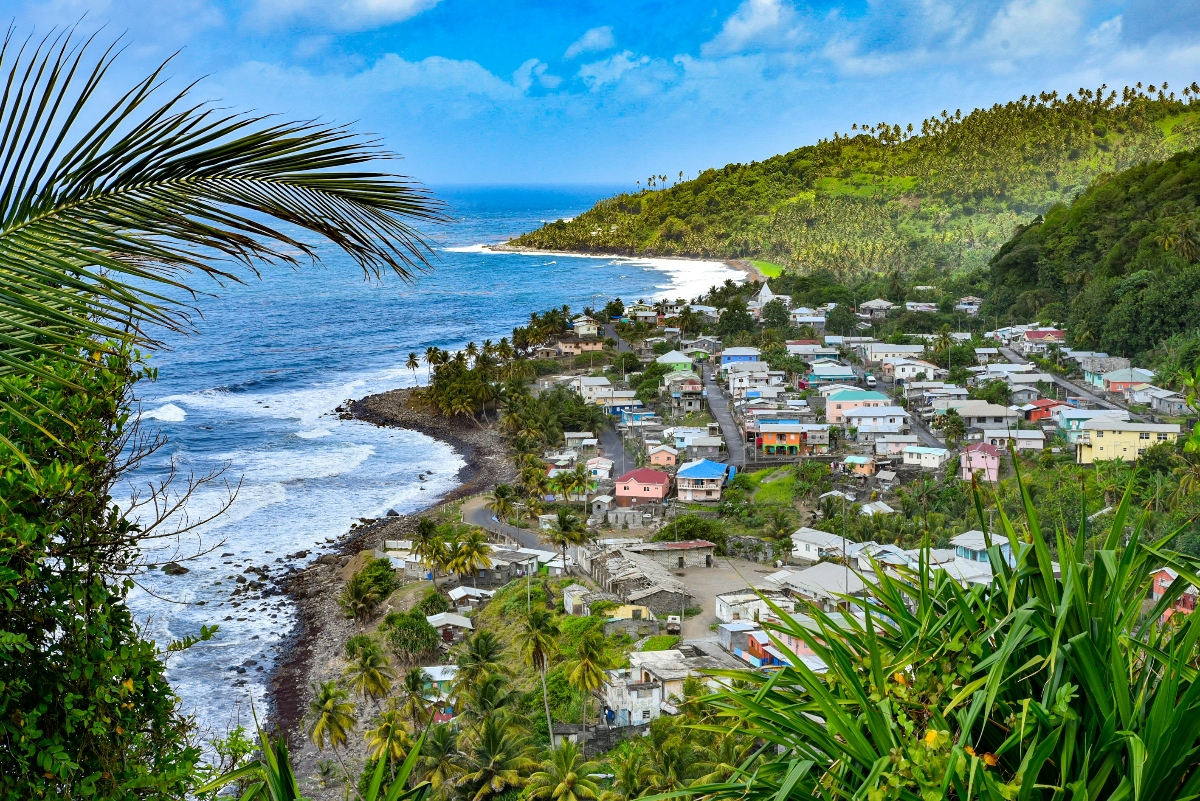
Not All Quiet Feels the Same in the Caribbean — And Choosing the Wrong Kind Can Ruin an Otherwise Perfect Trip
He came back from the trip looking more tired than when he left.
Not exhausted — just subtly, quietly depleted in a way that was hard to explain to people who asked how it was.
"Beautiful," he said. "Really beautiful. I just... I don't know. It didn't quite do what I needed it to do."
He'd gone to a small island. Remote. Barely developed. Exactly the kind of place that every travel recommendation in his life had pointed him toward when he said he needed to disconnect.
The island was quiet. Genuinely, profoundly quiet.
And that quiet — the specific form of it, the particular texture of it — was the wrong kind for him.
Not too much quiet. Not too little. The wrong kind.
That distinction took him months to articulate. But once he understood it, everything about choosing a Caribbean destination became clearer.
"Quiet" Has Become a Travel Shorthand — And It's Too Vague to Be Useful
Travelers say they want quiet. Destinations are described as quiet. Entire trips are planned around that single word as if it describes one thing.
It doesn't.
In the Caribbean specifically — a region that contains everything from the near-silence of Dominica's rainforest interior to the low-level social hum of Barbados' Speightstown on a Sunday morning to the complete sensory reduction of a remote beach in the Bahamas Exumas — quiet is not a single experience. It is a spectrum of experiences that produce completely different emotional outcomes.
Getting the distinction right is often the difference between a trip that genuinely restores something and a trip that was technically calm but somehow missed.
Quiet as Absence — When the World Gets Smaller
The first form of quiet works through subtraction.
Fewer stimuli. Fewer decisions. Fewer interactions. The world narrows, the field of attention shrinks, and the cognitive noise that follows most people everywhere begins to fade.
Culebra in Puerto Rico is a masterclass in this kind of quiet. The island doesn't offer much by way of variation or social life — it offers Flamenco Beach, a few restaurants that open and close on their own schedule, and the particular peace of a place that has no particular interest in entertaining you. Days feel circular. The same beach in the morning, the same colors in the afternoon, the same silence at night.
For travelers arriving genuinely depleted — the kind of tired that doesn't respond to distraction, that requires actual reduction of inputs — this is medicinal. The absence of choice is the point. The narrowing of the world is the gift.
The Bahamas outer islands work this way too. The Exumas, in particular, offer a version of quiet so complete that the comparison to everyday life feels almost surreal. There is water, sky, sand, and very little else. The absence is absolute.
But this kind of quiet has a boundary. For travelers who need some degree of human presence or gentle stimulation to feel grounded — who recharge through low-level connection rather than total withdrawal — absence-driven quiet can begin to feel isolating. What starts as relief slowly becomes a different kind of weight.
Quiet as Balance — When Life Continues at Half Volume
The second form of quiet works completely differently.
It doesn't eliminate sound or activity. It softens them. Life continues, but without urgency. There are moments of stillness interwoven with moments of presence. The traveler rests without disappearing from the world entirely.
Barbados offers this naturally — a well-organized island with a visible local life that moves at its own unhurried pace. The fish market in Oistins on a Friday evening. The quiet villages of the Scotland District in the island's interior. The particular rhythm of a place that is genuinely calm without being empty.
Vieques in Puerto Rico has this quality too — horses in the road, the malecón of Esperanza in the evenings, local life continuing visibly alongside the tourist experience without either interrupting the other. The island is calm, but it breathes. It has texture.
Grenada — particularly the areas outside the main tourist corridor — feels similar. A spice island with a strong local identity, beaches that are beautiful and uncrowded, a pace that feels genuinely unhurried rather than artificially slowed.
For travelers who want to feel calm without feeling cut off — who associate rest with gentle connection rather than total withdrawal — this balanced quiet is exactly right. Days have shape. There's a sense of being somewhere that has its own life, which is different from being somewhere that exists only for visitors.
But for travelers who came specifically for deep silence, this version can feel slightly too present. Too alive. Not wrong — just not what they were imagining.
Why the Confusion Happens So Often
Most travelers don't consciously distinguish between these forms of quiet. And the reason is simple: in everyday language, quiet is treated as a single state. Travel narratives reinforce this, grouping very different experiences under the same calming label.
When planning a trip, people tend to focus on what they want to escape rather than what they want to experience. Stress, crowds, obligations — these become the reference point. Quiet becomes defined as the opposite of all that, without further definition.
The result is that many Caribbean trips land in an emotional middle ground. They work. They're pleasant. The beach was beautiful. The weather was fine. But something about the experience didn't quite resonate.
The traveler did find quiet. Just not the kind their nervous system was actually asking for.
The More Useful Question
Instead of asking "Where can I find quiet in the Caribbean?" — which is like asking where you can find water — try asking "What kind of quiet do I actually need right now?"
Do you need absence — fewer inputs, fewer choices, fewer connections? Culebra. The outer Bahamas. Dominica.
Do you need balance — calm woven into presence, rest without isolation? Barbados. Vieques. Grenada.
There's no right answer. Only an honest one.
The Caribbean offers both forms — and many variations in between. But they are not interchangeable. And recognizing which one you need is often what turns a good trip into one that actually fits.
Ask Sun AI which kind of Caribbean quiet is right for you → 🌴
🌴 Plan Your Caribbean Trip
🗺️ Explore 35 Caribbean Destinations on CaribeX AI →
🏨 Find Hotels on Booking.com | ✈️ Search Flights on Expedia | 🌍 Hotels & Flights on Trip.com | 🎒 Agoda


